Technology led development for the optimist presents a great opportunity and a possible way to free from the drudgery of poverty and labor. On the other hand the pessimist may like to accuse the same exponentially scalable impact on the darker side, a view that may scare most of us!
The gadgets in the smart home domain with all their smarts pose some serious questions which should not be avoided and need greater enquiry. We look at following pillars which the solution developers may consider when designing the smart home solutions.
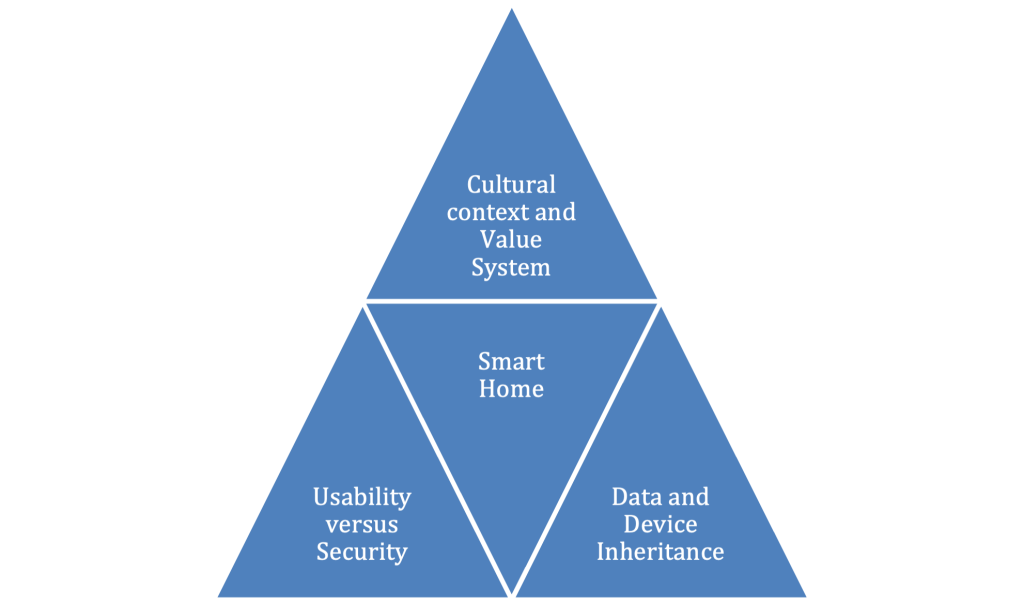
- Cultural context and value systems: Technology led solutions allow the developers from a specific culture to encode their preferences in the design of the solution. Since, technology solutions especially the ones in software (mobile applications, smart speakers etc) are global in nature. They also become a way to distribute the value systems and thought processes of developers at a larger scale which may or may not be aligned to the cultural context of the user. For example: the over the top (OTT) apps like Netflix or Amazon prime expect users to have individual profiles for their recommendation system to work. Such an individualized / personalized approach works well in individualistic societies and when devices are personal. In a family setting however, these may bring interesting conflicts from watch history available to other family members when the smart TV is shared by different family members for example in a country like India. Should the OTT providers think differently and not same for all cultures!
- Usability versus security: Building on the same example of OTT, imagine you have an account on ecommerce website such as Amazon and you are also an Amazon Prime user. You have a family member who wants to use your prime account to watch movies, which is common in the Indian context. You end up sharing the login password which is also common for your ecommerce account. So you end up also sharing your order history! So, usability is at the loggerheads with security in this context (single login across devices and applications). Think this in another scenario, where many of our smart home gadgets like a bulb or a fan are paired with the wireless router at home. The wireless router will increasingly become the central nervous system in a way connecting all our smart devices like cctv, smart tv, bulb or a fan. One fine day you have an unsuspecting neighbour or a guest asking for the Wi-Fi credentials to connect. You end up sharing the most essential password that may disrupt the functioning of large number of devices at your home. How easy it is to generate a one-time credential or to monitor unsolicited access to your devices? While there are enterprise grade solutions available to do access management already, can this become a wider best practise and makes it easy for home owners not to have usability as a trade-off with security or vice versa.
- Data and Device Inheritance: Most devices that are for consumer usage often come with a factory reset option. Which enables the device to be at the start state ready to be provisioned as it came from the factory for the first time. As the devices are increasingly becoming digital and generating more and more data, a key question arises is to develop a policy for handover of the device say from one family member to another in (worst) case of the demise of the owner. For example imagine someone who is able open their door locks using a smart key mechanism has an accidental death, how could their family members obtain the keys in a legitimate and user friendly manner without compromising the asset at hand. Should the user when provisioning the device also specify the nomination in case of death which is a common practice for insurance policies and bank accounts. Should the inheritance of device or data be regulated. Currently there are no provisions which govern such handovers and consumers are more at the mercy of individual company policies.
 EmergTech