
EXECUTIVE SUMMARY
High-Level Dialogue on AI and Digital Public Goods
At the Sidelines of the India AI Impact Summit 2026
| Date | Friday, 20 February 2026, 5:00 PM – 7:00 PM IST |
| Venue | Royal Norwegian Embassy, New Delhi |
| Hosted by | Royal Norwegian Embassy & Norwegian Agency for Development Cooperation (Norad), in partnership with the Digital Public Goods Alliance (DPGA) |
| Format | High-level panel with technical showcases of CAR, DHIS2, DiCRA, and ODK |
1. Overview
This invite-only dialogue convened ministers, civil society leaders, technologists, and development practitioners to examine the intersection of Digital Public Goods (DPGs) and Artificial Intelligence (AI). The event explored two core questions: how DPGs can democratize AI development through open data, open-source models, and shared infrastructure; and how DPGs themselves can leverage AI responsibly to deliver real-world impact in climate, health, and agriculture.
The dialogue featured high-level addresses from ministers of Brazil and Norway, technical showcases from four DPG product teams, and a strategic panel discussion on sustainability, market dynamics, and the future of open-source AI.
2. High-Level Welcome & Ministerial Addresses
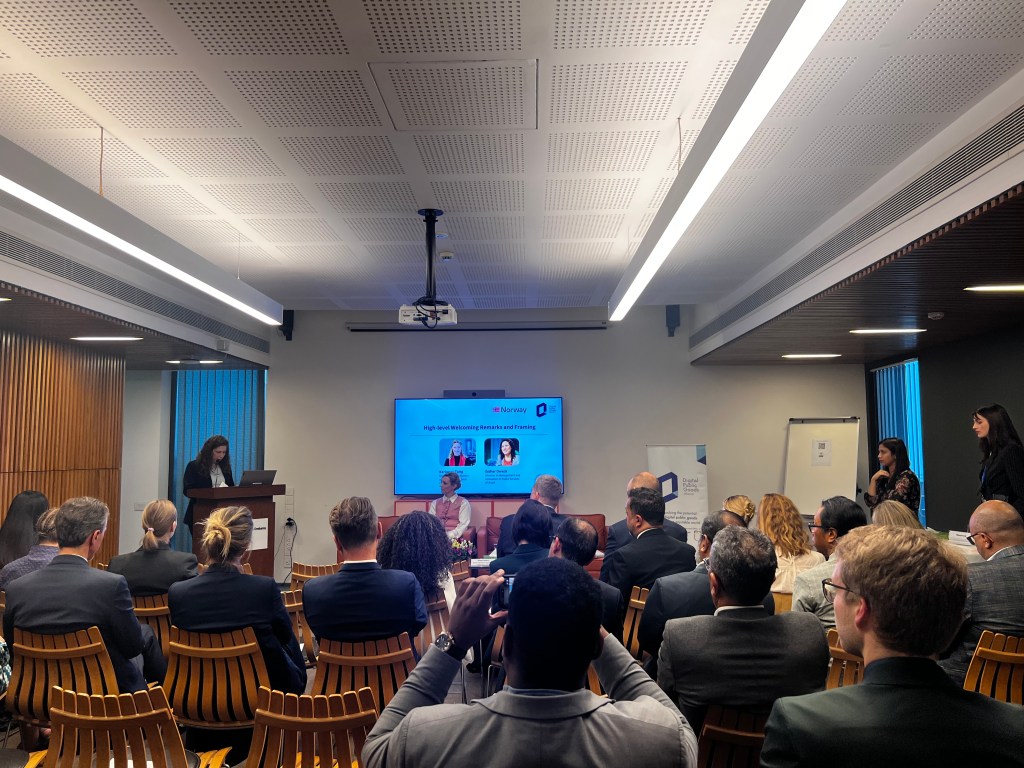
Ms. Esther Dweck – Minister of Management and Innovation in Public Services, Brazil
Minister Dweck framed the discussion around the role of capable states in driving digital transformation for climate action. She emphasized that the promise of digital democratization has given way to asymmetric, near-monopolistic dynamics, with the benefits of the digital economy concentrated among a few countries and companies. She called on national governments to act as guardians of the public interest by democratizing the benefits and mitigating the risks of digital transformation.
Minister Dweck highlighted Brazil’s concrete contributions, including the launch of the Rural Environmental Registry (CAR) as a Digital Public Good during COP30, and a joint plan with Norway and the DPGA to accelerate Digital Public Infrastructure and DPGs for climate action. She called on participants to work together to promote DPGs, DPI, and AI solutions that address real-world climate challenges.
Ms. Karianne Tung – Minister of Digitalisation and Public Governance, Norway
Minister Tung’s remarks (referenced by subsequent speakers) reinforced Norway’s longstanding commitment to inclusive Digital Public Infrastructure and the global adoption and development of DPGs. Norway’s partnership with India on DPGs, through the Norway-India Partnership Initiative (NIPI), was highlighted as a flagship bilateral collaboration.
3. Technical Showcases: AI & Digital Public Goods
3.1 DPG Standard Updates for AI – Amreen Taneja, DPGA
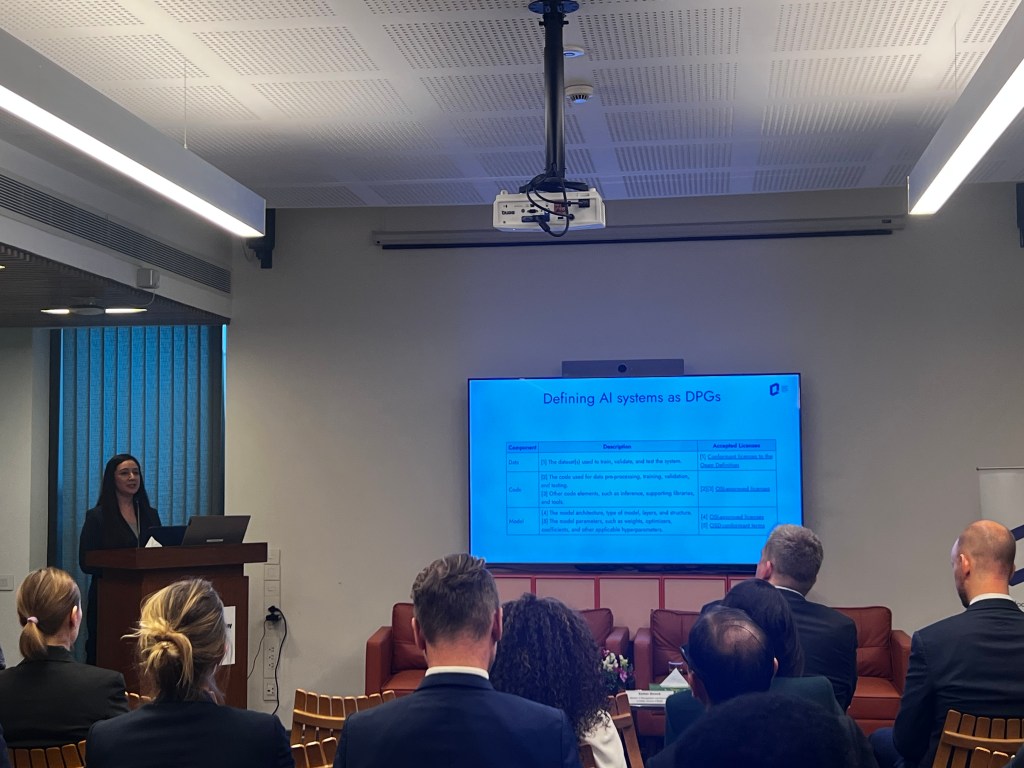
Amreen Taneja, Standards Lead at the DPGA, presented the updated DPG Standard for AI systems. The DPG Registry now contains over 300 recognized solutions, including well-known platforms such as DHIS2, Wikipedia, Drupal, Mastodon, and Tor Browser.
The new “AI DPG” category was developed through a community of practice co-led by the DPGA and GIZ, with members from nearly 50 organizations. Key updates include: a requirement that all training data used in AI systems must be open and available for recognition as an AI DPG; specific documentation requirements for data provenance and model architecture; and alignment with UNESCO’s Recommendation on the Ethics of AI for responsible AI practices. Taneja emphasized that the standard is a living document, designed as a starting point that evolves with the AI landscape, and noted that several potential AI DPGs are already in the pipeline.
3.2 DHIS2 & the TRUST Centre – Prof. Morten Daehlen, University of Oslo
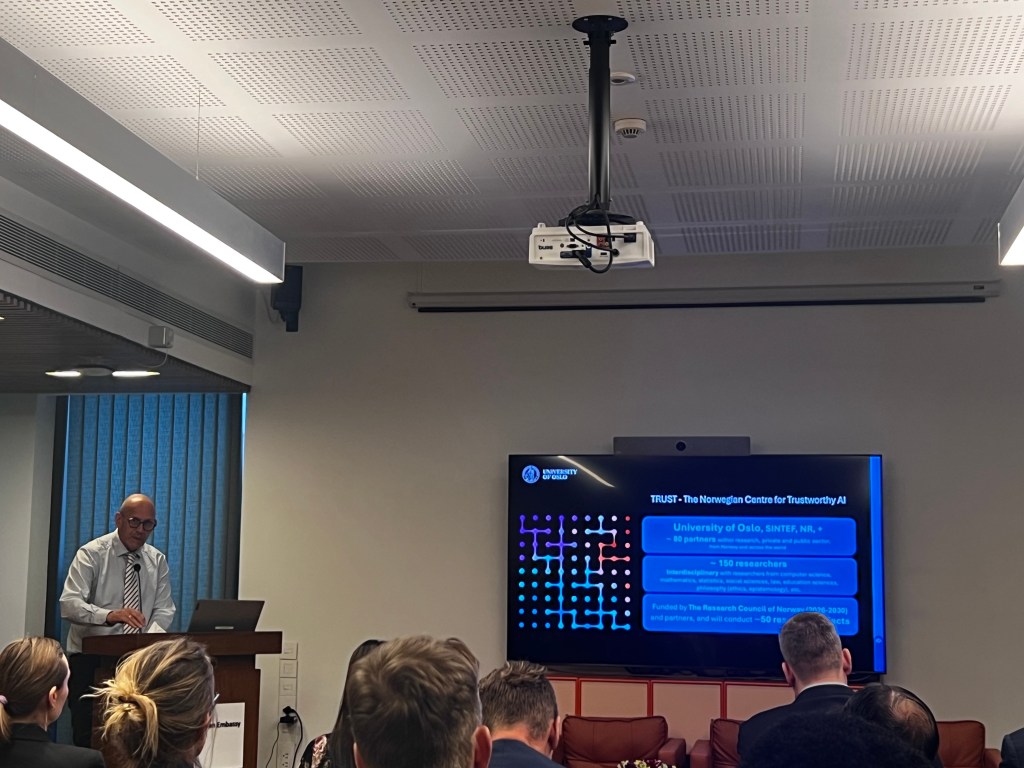
Prof. Morten Daehlen presented DHIS2, the open-source health information system developed at the University of Oslo since 1994 and now deployed at national scale in 76 countries, covering 3.2 billion people. DHIS2 has expanded beyond health into agriculture, education, and climate applications.
He introduced the newly funded TRUST Centre (2026–2031, Research Council of Norway), a 150-researcher initiative with 80 institutional partners including the Rwanda Ministry of Health. TRUST operates through three action clusters: Health, AI for Adaptation to Climate and Nature, and Green AI for the Green Transition. A flagship project on predictive modelling and early warning of climate-sensitive diseases combines health data from DHIS2 with climate data through harmonized, open-source AI models designed to be computationally efficient and “green.” Pilot projects are underway in Uganda, Malawi, Mozambique, Rwanda, Nepal, and Laos, with a capacity-building workshop in Kigali bringing together participants from 60 countries across Africa and Asia.
3.3 CAR – Rural Environmental Registry, Brazil – Henrique Pereira
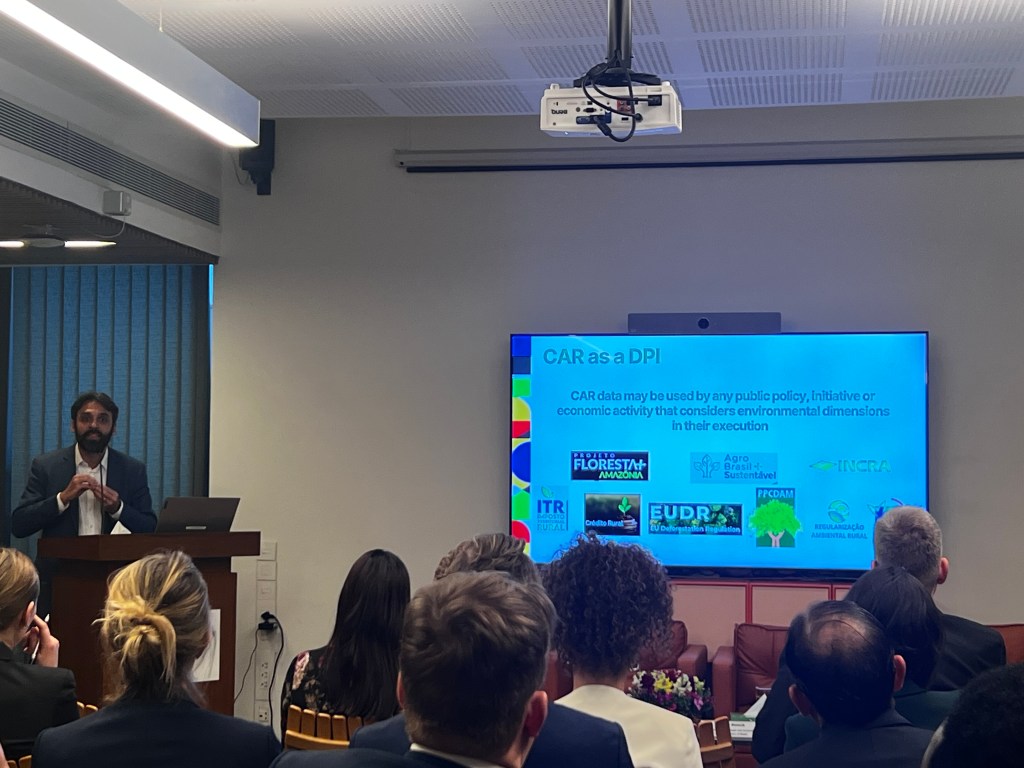
Henrique Pereira detailed Brazil’s Rural Environmental Registry (CAR), established under the 2012 Forest Code reform. CAR is a declaratory public registry spanning over 8 million entries covering 750 million hectares of rural properties, making it one of the world’s largest crowdsourced environmental mapping efforts.
CAR collects granular, property-level data on environmental attributes including permanent preservation areas (riparian forests, hillslopes, water springs) and legal reserve requirements (80% in the Amazon, 35% in transition zones, 20% elsewhere). Originally designed for forest code compliance, CAR has become foundational Digital Public Infrastructure feeding into payment for environmental services, Amazon traceability, land tax reform, rural credit conditionality, and carbon market initiatives. Brazil is now restructuring CAR as a DPG in partnership with Norad so other countries with large forests can adopt and adapt the system.
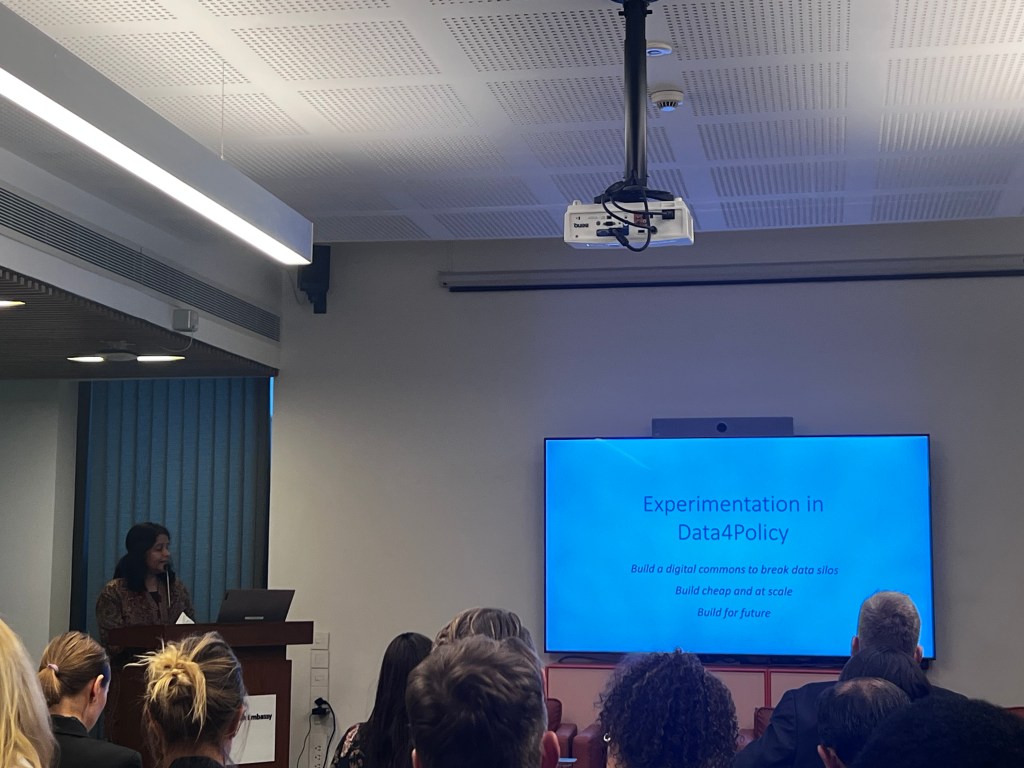
3.4 DiCRA – Data Intelligence for Climate Resilient Agriculture – Shweta Srinivasan
Shweta Srinivasan presented DiCRA, a DPG built through a collaborative effort of over 40 organizations and 100 volunteers, starting from just $20,000 in seed funding. DiCRA provides long-term trend analysis of climate impacts on agriculture through measurable parameters, helping identify both vulnerable areas and pockets of climate resilience.
The platform uses open-source AI and ML techniques, including object detection and Meta’s Segment Anything Model, for applications like polyhouse detection from satellite imagery. DiCRA’s DPG accreditation generated significant visibility, leading to partnerships with India’s Ministry of Agriculture, NABARD (the National Bank for Agriculture and Rural Development), and RBI. NABARD has become the platform’s “hyperscaler,” hosting the solution and expanding it to all-India coverage. Notably, DiCRA achieved approximately 60–70% women participation among climate data science contributors. International interest has emerged from Somalia, Mauritania, and other countries seeking to replicate the platform as a climate information system. The journey from prototype ($20K) to nationally scaled, sustainably hosted DPG exemplifies frugal innovation through open collaboration.
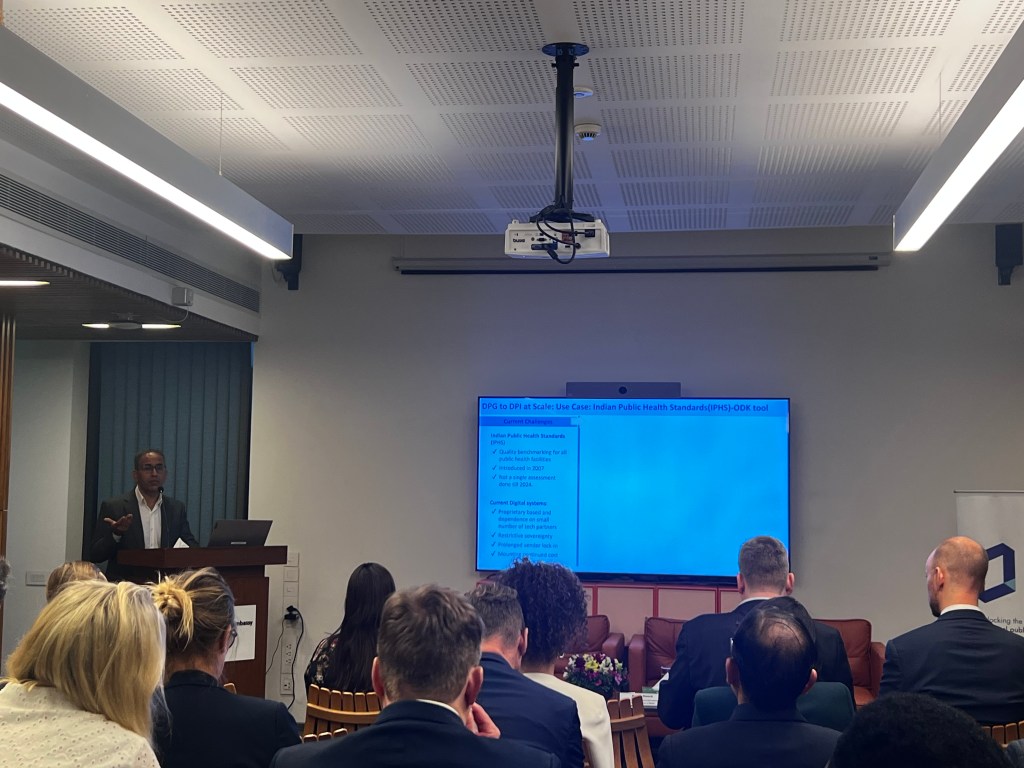
3.5 ODK for Public Health Infrastructure – Dr. Ashfaque Ahmed, Norway-India Partnership Initiative (NIPI)
Dr. Ashfaque Ahmed demonstrated how the Norway-India Partnership Initiative operationalized the ODK (Open Data Kit) tool to digitize India’s public health facility readiness assessment. In under one year, 210,000 health facilities were digitized across all levels from sub-centres to tertiary care hospitals, creating one of the world’s largest public health infrastructure datasets.
Key outcomes include: facility report cards with compliance scores; role-based dashboards at national and state levels; standardized data available within 3 days (versus months or years previously); licensing cost savings of $3–5 million USD; per-facility digitization cost under $1/year; and estimated health economic value of $35–70 billion per year. The system is fully government-owned with zero vendor lock-in and is ABDM (Ayushman Bharat Digital Mission) compliant. Dr. Ahmed contrasted this with India’s Reproductive and Child Health (RCH) registry, which has been under proprietary development for 18 years without completion. Future applications include predictive infrastructure planning, automated gap analysis, and AI-driven data validation using sovereign health data models.
4. Strategic Panel Discussion: The Way Forward
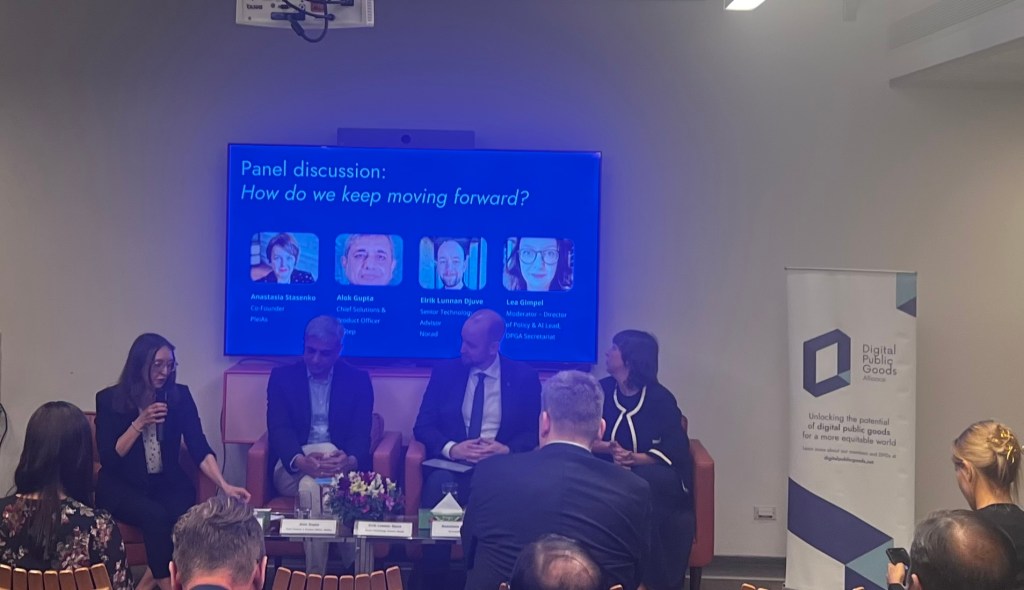
The closing panel, moderated by Lea Gimpel (DPGA), featured Alok Gupta (EkStep Foundation), Eirik Lunnan Djuve (Norad), and Anastasia Stasenko (Pleiaïs). The discussion was structured around three conceptual buckets defined by the DPGA: AI DPGs (open-source AI systems meeting DPG standards), AI-enabled DPGs (DPGs using AI to improve their products), and DPGs for responsible AI (open data and tools feeding responsible AI development).
Open-Source AI: The Pleiaïs Perspective
Anastasia Stasenko described Pleiaïs’ approach of building small foundation language models (under 1 billion parameters) trained entirely on permissively licensed data. Their Common Corpus—the world’s largest fully provenance-based training dataset at over 2 trillion tokens—draws exclusively from national library public domain holdings, open government data, and open-access scientific publications. The corpus has been used over one million times on Hugging Face and by organizations including NVIDIA and Swiss AI. Pleiaïs deploys offline AI assistants on Raspberry Pis and old Android phones for use cases like supporting community health workers in Senegal and the Democratic Republic of Congo. Stasenko was candid that there has been “zero benefit” to the company commercially from the open approach, with the entire Common Corpus built by a bootstrapped startup without external funding.
Market Dynamics and the Role of Government
Alok Gupta (EkStep Foundation) argued that data availability is the “oxygen” for AI innovation, citing India’s AI for Bharat initiative at IIT Chennai, which created open-source local language datasets that both startups and large companies now build upon. He emphasized that governments must aggregate demand to create sustainable market economics for open-source AI, moving beyond seed capital to pull private sector investment through scaled use cases. Gupta positioned DPGs as a collaboration mechanism where the real value lies not in code itself but in embedded best practices, enabling countries to avoid reinventing the wheel.
The Donor Perspective
Eirik Lunnan Djuve (Norad) outlined Norway’s approach of prioritizing open data through procurement and grant-making, including an open data policy requiring that all data generated or collected using Norwegian development funds must be openly available. He noted the AI ecosystem lacks the kind of massive public investment that built the open internet, making public-private partnerships essential. On the question of whether agentic AI renders DPGs obsolete, Djuve argued that DPGs remain critical not for code per se, but for tried-and-tested systems deployed at scale, community-driven quality assurance, and the “do no harm” safeguards embedded in the DPG standard.
A Cautionary Note on Proprietary AI Tools
Stasenko offered a counterpoint to the panel’s optimism about AI-driven democratization, warning that the coding and agentic tools enabling faster DPG development are themselves fully proprietary, owned by a small number of companies. She highlighted that large open-weight models (e.g., Chinese open-weight releases) are not truly open in terms of transparency, reproducibility, or ability to run on public infrastructure. She pointed to emerging initiatives like Public AI and AI Commons as important counterweights.
5. Key Themes and Takeaways
1. DPGs as Collaboration Infrastructure: DPGs were consistently framed not merely as open-source software, but as vehicles for embedding domain best practices, enabling cross-country collaboration, and reducing barriers to adoption across diverse contexts and scales.
2. Open Data as Foundation for Equitable AI: Every speaker reinforced that open, well-documented data is the prerequisite for inclusive AI development—from Pleiaïs’ provenance-based training corpora to DiCRA’s climate datasets to DHIS2’s harmonized health-climate data pipelines.
3. Frugal Innovation at Scale: Multiple showcases demonstrated that large-scale impact can emerge from modest investment when combined with open approaches, community volunteers, and institutional partnerships (DiCRA: $20K to national scale; ODK: <$1/facility/year for 210,000 facilities).
4. Sovereignty and Vendor Independence: Government ownership of data and infrastructure was a recurring priority, with the ODK/NIPI case providing a stark contrast to 18 years of proprietary vendor lock-in on India’s RCH registry.
5. The Sustainability Gap: Despite demonstrated impact, sustainable funding for open-source AI and DPGs remains a critical challenge. Pleiaïs’ experience of building foundational public goods without securing any funding underscores the market failure that donor and government intervention must address.
6. Proprietary Dependencies in Open Ecosystems: The panel surfaced an uncomfortable tension: much of the tooling enabling open-source development (coding agents, large foundation models, cloud infrastructure) is itself proprietary and concentrated among a few companies.
7. Climate as Unifying Use Case: Climate change served as the connective thread across all showcases—from Brazil’s forest registries to DHIS2’s climate-health early warning systems to DiCRA’s agricultural resilience monitoring—reinforcing DPGs as critical infrastructure for climate action.
Closing Remark: Moderator Lea Gimpel concluded by invoking Prime Minister Modi’s words at the AI Impact Summit inauguration—that AI will benefit the world only when it is shared openly—and called for “collaboration from Bergen to Brasília to Bangalore” to advance open-source AI and Digital Public Goods.
 EmergTech